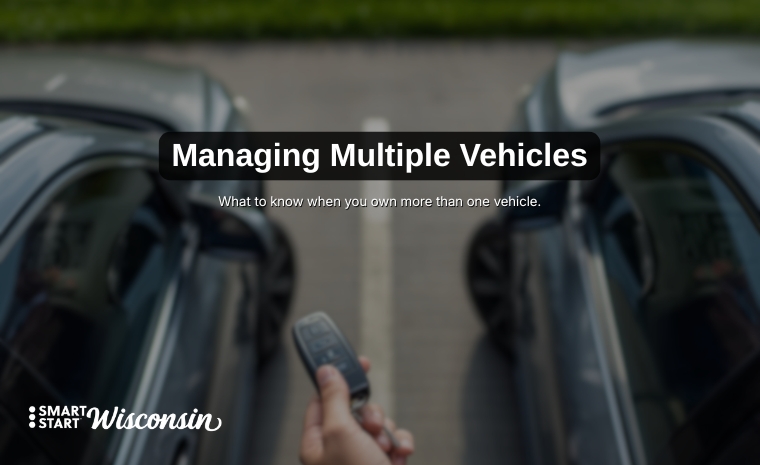
If your household has multiple vehicles, an IID order quickly raises a practical question: Do the ignition interlock rules in Wisconsin apply to every car in the driveway, or just the one you drive?
The answer depends on whose name is on the title, not who does the driving. That distinction shapes almost every household logistics question that comes up in the first 30 days.
Which Vehicles Actually Need an IID?
Wisconsin law requires an ignition interlock device on every vehicle titled or registered in your name. It does not matter whether you drive that vehicle daily, occasionally, or almost never. If your name is on the paperwork, the device requirement follows it, unless a court grants a specific exemption.
This surprises a lot of drivers. A pickup truck that mostly sits in the garage still counts. So does a car your teenager drives to school, if you are the registered owner. The rule tracks ownership, not usage.
A few vehicle types fall outside of this requirement. Motorcycles, mopeds, and autocycles do not need an IID installed under WisDOT rules (found under the “How an IID Order Affects You” drop-down menu). Your restriction still limits you to operating only interlock-equipped vehicles.
Can a Spouse or Family Member Drive the IID Vehicle?
Yes. The restriction applies to you, not to your household. A spouse, adult child, or other family member can drive a vehicle equipped with an interlock device. The driver will need to render a breath sample. They’ll also be photographed, and the results will be associated with the driver, not with the vehicle owner.
Someone with an IID order can also drive someone else’s vehicle as long as it has a functioning and monitored IID device. What they cannot do is let you drive a different, non-equipped vehicle.
If a vehicle is titled to the name of a person with an IID order but driven exclusively by a spouse or family member, Wisconsin courts can grant an exemption to exclude that specific vehicle. This relief is granted if equipping every car registered to you would create an undue financial hardship. An exemption requires a petition to the convicting court. If a spouse’s car is titled solely in the family member’s name, no exemption is necessary.
Storage Vehicles, Seasonal Cars, and Exemption Requests
A motorcycle in winter storage or a boat trailer does not need an interlock device. Neither one requires a Class D license to operate. A summer car or a vehicle you rarely start is a different story. If it is titled in your name, it technically requires an IID unless you request and receive a court exemption.
The exemption process runs through the convicting court, not through Smart Start Wisconsin or WisDOT directly. You will need to show the financial burden of equipping every household vehicle. The court then decides whether to grant relief. Once approved, the court notifies the DOT, and you will receive a copy of the exemption for your records.
Flagging the household vehicle in question early prevents a scramble weeks later, as drivers often assume ownership questions get sorted out later, then discover a hardship exemption request was due at sentencing.
Getting the Logistics Right the First Time
Households with multiple vehicles do not need to guess at these rules. The requirement follows the title. Family members can drive the equipped vehicle freely, and exemptions exist for vehicles you genuinely do not use. Sorting out which category each vehicle falls into early prevents confusion, and often expense, down the road.
Have questions about your Wisconsin IID requirements and how they apply to your household? Visit our Support page or call our team, available 24/7, to talk through your specific situation.